
American Nurses Association Statement on the Passing of Barbara Nichols, Trailblazing Nurse Leader Who Broke Racial Barriers in the Profession
American Nurses Association honors its first Black president, whose visionary leadership advanced equity and elevated nursing’s voice in national health policy
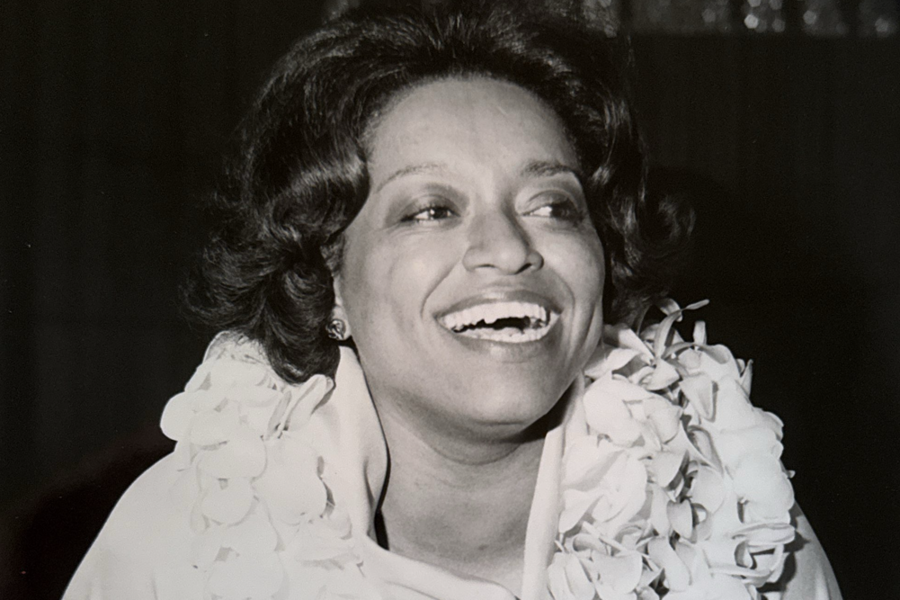
SILVER SPRING, MD – July 22, 2026 – The American Nurses Association (ANA) joins the nursing community in mourning the loss of Barbara L. Nichols, DL(h), DSc(h), PedD(h), MSN, RN, FAAN, a nursing trailblazer and transformational leader whose courage, conviction, and clarity reshaped the profession and paved the way for generations of nurses.
Barbara served as the first Black president of ANA, elected in 1978 and re-elected in 1980, serving two terms through 1982. Before that, she served as president of the Wisconsin Nurses Association from 1970 to 1972, becoming the first Black president of a state nurses association. Across a career spanning more than 60 years, she built an enduring legacy rooted in justice, integrity, and professional excellence.
“Barbara Nichols redefined nursing leadership as we know it,” said Jennifer Mensik Kennedy, PhD, MBA, RN, NEA-BC, FAAN, President of the American Nurses Association. “She played a pivotal role in shifting the profession from the margins to the center of health policy and equity, and she did it with grace, grit, and unmatched wisdom.”
Born in 1939 in Waterville, Maine, and raised in Portland, Barbara came from a family that instilled deep pride in education and public service. Her mother often said she “came out of the womb saying she wanted to be a nurse.” She was inspired by a public health nurse and family friend who taught her to use a toy nurse’s kit to care for her dolls. From those early days, Barbara understood the honor and responsibility of nursing—a profession whose roots she once reflected “come to us from antiquity and whose care demands no less than our very best.”
A graduate of Massachusetts Memorial Hospital School of Nursing, she earned her bachelor’s degree at Case Western Reserve University and her master’s degree at the University of Wisconsin–Madison. She was one of only two Black students admitted to her nursing school class. After graduation, she accepted a job at Boston Children’s Hospital, where she was the only Black registered nurse on staff.
She then served in the U.S. Navy Corps as head nurse at the U.S. Naval Hospital in St. Albans, Queens, a position few Black women held at the time. She recalls that early in her career she felt that her opinions were often ignored because of her race, which motivated her to become a nurse leader.
After her time in the Navy Nurse Corps, Barbara worked as a nurse at St. Mary’s Hospital in Madison, Wisconsin and served for 12 years on the ANA Board of Directors before assuming the presidency. Her presidency was marked by a commitment to setting baccalaureate education as the standard for entry into practice. Under her leadership, ANA approved a landmark resolution in support of this standard—a decision she described as “highly divisive, but essential for the recognition of nursing as a true profession.”
She also spearheaded ANA’s collaboration with the American Medical Association and the American Hospital Association, ensuring that nurses had a seat at the national policymaking table alongside other prominent healthcare leaders. “Nurses are the ones at the bedside, observing what is happening to people, and we need to have a say in it,” she shared when speaking about the significant contributions nurses make to healthcare at large.
Barbara also served as CEO of the Commission on Graduates of Foreign Nursing Schools (CGFNS), advocating for fair treatment and credentialing of internationally educated nurses. She was a professor, a mentor, and a global voice for nurses as a member of the board of the International Council of Nurses.
“She reminded us that true leadership means seeing the unseen,” said Angela Beddoe, CEO of the American Nurses Enterprise. “Barbara spoke often about the honor of being invited into the most vulnerable moments of people’s lives. That sense of purpose informed every decision she made, and every life she touched.”
Her legacy includes numerous high honors. She was named a Living Legend of the American Academy of Nursing (the Academy) in 2010, University of Wisconsin–Madison Outstanding Woman of Color in 2018, and was inducted into the ANA Hall of Fame in 2022. She was the inaugural recipient of the University of Wisconsin–Madison School of Nursing’s Canary Savage Girardeau Award for Health Equity, Diversity, and Inclusion in 2023. She also received the prestigious lifetime achievement award from the Academy at its October 2023 health policy conference.
In Barbara’s words, “Nursing is indeed a noble profession. We are there in people’s moments of joy and trauma. That is a unique privilege. And because of that, our knowledge must match the depth of our responsibility.”
We extend our deepest condolences to Barbara’s family, colleagues, students, and the countless nurses she inspired throughout her lifetime. Though her passing is a tremendous loss to the nursing community, her wisdom, courage, and legacy will forever guide the profession forward.
###
About the American Nurses Association
As the oldest organization representing more than 5 million nurses, the American Nurses Association stands at the forefront of advancing nursing excellence. The association harnesses The Power of Nurses® to champion the profession and drive transformation in healthcare. Through legislative and political advocacy, comprehensive educational services, and the profession’s leading Code of Ethics and Scope and Standards, the association empowers nurses across every specialty and practice setting. The association is committed to ensuring healthy work environments, shaping pioneering policies, and cultivating partnerships that enhance both the nursing profession and the broader healthcare experience.
MEDIA CONTACT: newsroom@ana.org